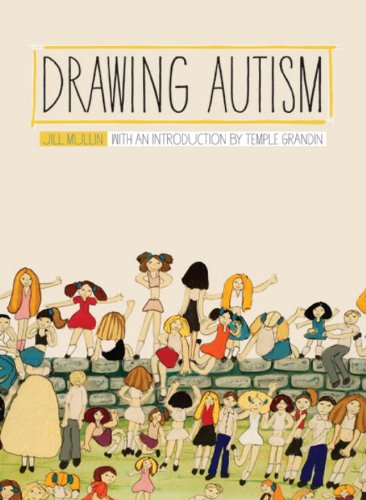
Drawing autism / Jill Mullin con una introducción de Temple Grandin
Material type: TextLanguage: English Publication details: New York : Mark Batty Publisher, 2009. Description: 159 páginas : ilustraciones (color) ; 28 cmContent type: textual Media type: No mediado Carrier type: VolumenISBN: 9780981960005Subject(s): Arte contemporáneo -- Ensayos, conferencias, etc | Artistas plásticos -- Ensayos, conferencias, etc | -- Ensayos, conferencias, etc. Niños autistas | Dibujo -- Ensayos, conferencias, etc | Artistas con enfermedades mentalesDDC classification: 704.0874 D76d 2009
 | Item type | Current library | Call number | Copy number | Status | Date due | Barcode |
|---|---|---|---|---|---|---|
 Libro
Libro
|
ArtNexus General | 704.0874 D76d 2009 (Browse shelf(Opens below)) | Ej.1 | Available | 13652 |
Browsing ArtNexus shelves, Shelving location: General Close shelf browser (Hides shelf browser)

|
No cover image available No cover image available |

|

|
No cover image available No cover image available | No cover image available No cover image available | No cover image available No cover image available | ||
| 704.042972 P94c 2007 Chicana art : | 704.08 E56e 1987 Encuentro : las artes plásticas en la vida de los niños / | 704.083 Y78y 2009 | Younger than Jesus | | 704.0874 D76d 2009 Drawing autism / | 704.482 F28f 1998 La fe y el arte : | 704.4939861 C71c 1981 Colombia, una mirada política / | 704.942 D46d 1996 El desnudo |
Incluye biografías de los artistas
Naturing the ways in which we see the world. -- As seen through the autism spectrum. -- Interaction, individual and societal. -- Repetition, repetition, repetition. -- Getting from here to there. -- Bird's eye view. -- Another world. -- It's all history. -- Art for art's sake.
Utilizando obras de arte creadas por personas con diagnóstico de TEA, Dibujando el Autismo celebra su arte y autoexpresión, a la vez que sirve como una vía de acceso para comprender cómo se manifiesta el TEA en las personas. El autismo se conoce como un "trastorno del espectro" porque no hay dos diagnósticos exactamente iguales; sin embargo, existen rasgos característicos del TEA. A través de su arte, los autores muestran perspectivas únicas sobre cómo ven el mundo y su lugar en él. Los siete capítulos del libro —Interacción, individual y social; Repetición, repetición, repetición; De aquí para allá; Vista aérea; Otro mundo; Todo es historia; Arte por el arte— abordan directamente las características fundamentales del TEA.
Textos en ingles
Textos en ingles